How to Identify Gold at Home: 7 Simple Tests Anyone Can Do
People show interest in gold because of its ability to shine and maintain value while people associate it with special memories. The truth about gold identification at home exists because people need to visit jewelers when they want to identify it. You can perform multiple trustworthy tests which require only basic household materials to complete.
People who have doubts about their gold items can visit Dwarka’s gold service providers for expert testing services. Basic testing knowledge provides you with testing ability which enables you to conduct tests without using your complete testing tools. First aid training works like this: people learn the skills to help others who are in need of assistance.
The guide shows users how to assess gold purity through scientific methods which they can practice at their homes. Our research uses established industry methods together with Bureau of Indian Standards (BIS) regulations which govern gold hallmarking procedures in India.
Why Knowing How to Test Gold at Home Matters
Fake gold exists. Gold-plated items look convincing. Even experienced buyers sometimes get fooled. That’s why learning how to test gold at home protects your money and peace of mind.
You don’t need lab equipment. Most tests rely on simple physics and chemistry principles. Gold has unique properties:
- It does not rust or tarnish
- It feels heavy for its size
- It resists magnetism
- It stays chemically stable
These traits make identification easier than you might think.
And remember—if you plan to sell jewelry later, a reputable Gold buyer in Dwarka will also perform professional checks before offering a price.
1. Check the Hallmark Stamp First
Start with the simplest method. Look closely at your jewelry.
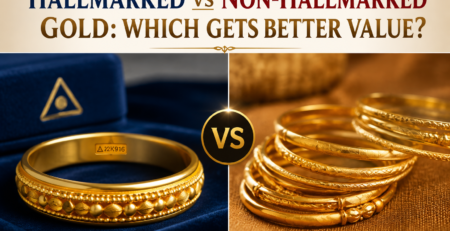
Most genuine gold in India carries a BIS hallmark, which confirms purity standards. According to the Bureau of Indian Standards, hallmarking ensures authenticity and protects consumers from fraud.
What to Look For
You may see markings like:
- 22K
- 18K
- 916
- 750
These numbers represent gold purity levels.
If you find a clear hallmark, you already have strong evidence. If you don’t see one, continue with the tests below. Some older jewelry lacks hallmarks but still contains real gold.
This step answers a big part of the question: how to check real gold quickly and safely.
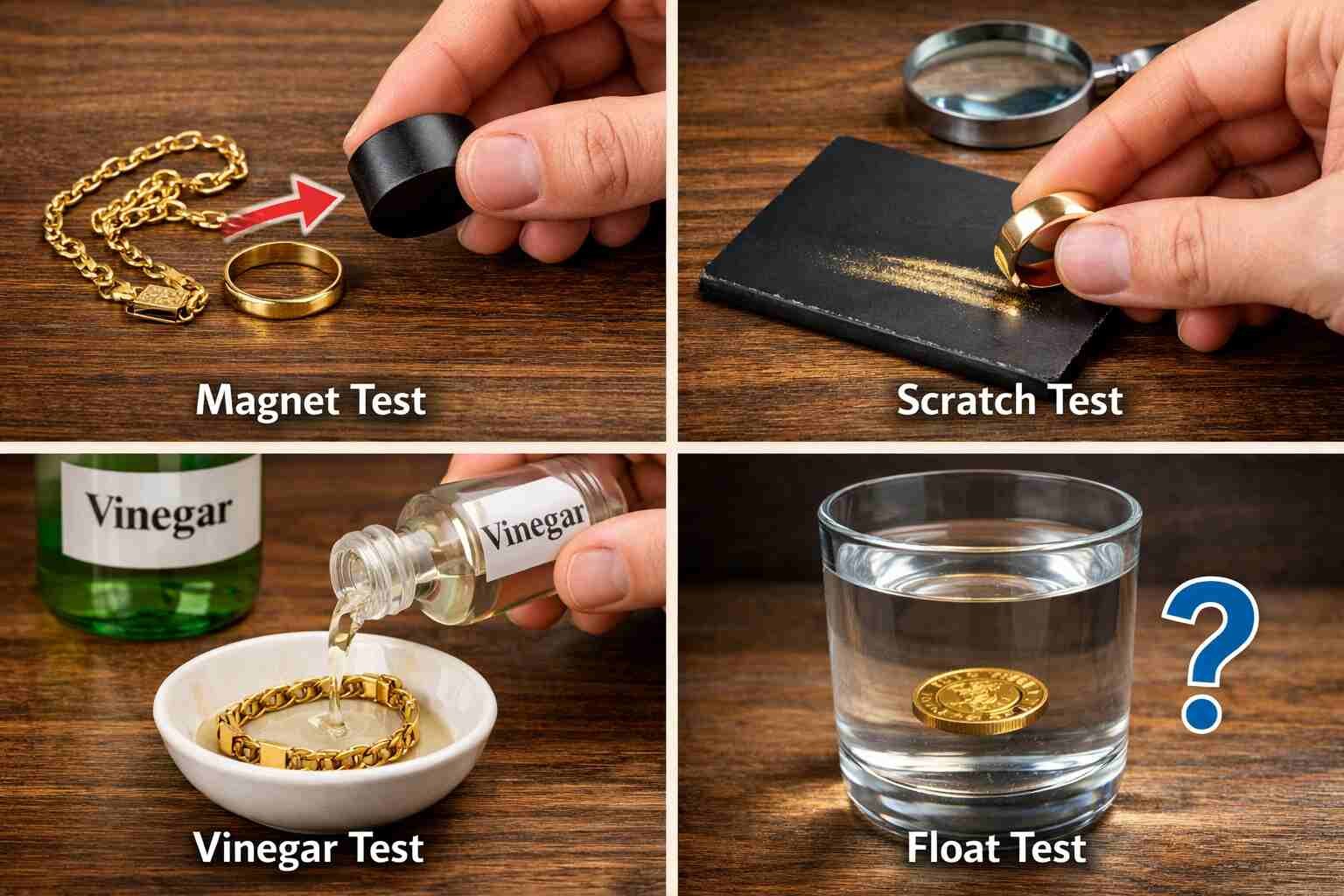
2. Try the Magnet Test
Gold does not stick to magnets. This test takes less than 10 seconds.
How to Do It
- Take a strong household magnet
- Hold it near the jewelry
- Watch for movement
What It Means
- No reaction → Likely real gold
- Strong attraction → Probably fake or mixed metal
This test works because gold is non-magnetic. Most counterfeit metals contain iron or nickel, which magnets easily pull.
Still, use this test as a first filter—not final proof.
3. Perform the Float Test with Water
This test uses basic density science. Real gold feels heavy and sinks quickly.
Steps
- Fill a bowl with water
- Drop the jewelry into it
Results
- Sinks immediately → Likely genuine gold
- Floats or stays suspended → Possibly fake
Gold has high density—about 19.3 grams per cubic centimeter, according to standard metallurgy data. That density makes it noticeably heavier than most metals.
This simple method helps many people understand how to identify gold at home without special tools.
4. Use the Ceramic Scratch Test
This test checks the metal’s color beneath the surface.
What You Need
- An unglazed ceramic plate
How to Do It
Gently drag the gold item across the ceramic surface.
Observe the Mark
- Golden streak → Likely real gold
- Black or gray streak → Likely fake
Be gentle. You don’t want to damage valuable jewelry. Think of it like testing a pen—you only need a light touch.
5. Check for Skin Reaction
Real gold stays chemically stable. It does not react with human skin.
Watch for These Signs
- Green marks on skin
- Black discoloration
- Red irritation
These reactions usually indicate other metals like copper or nickel.
This test feels surprisingly personal. Your own skin becomes the detector.
Still, remember—cosmetics and sweat can also cause reactions. Use this method alongside others for better accuracy.
6. Try the Nitric Acid Test (Use with Caution)
Jewelers often rely on nitric acid because it reveals metal composition quickly. The test follows basic chemistry rules: gold resists corrosion.
Important Safety Note
Wear gloves and perform the test carefully. Nitric acid can burn skin.
How It Works
Apply a small drop of nitric acid to the metal.
Results
- No reaction → Real gold
- Green or milky reaction → Fake or low purity
Professional jewelers use this method daily. If you feel uncomfortable, visit a reliable gold service provider in Dwarka instead of handling chemicals yourself.
7. Observe the Color and Shine
Gold maintains a consistent color. It does not fade or peel.
Check These Details
- Uniform yellow tone
- Smooth surface
- No discoloration at edges
Fake gold often reveals different colors underneath the coating. Over time, the shine fades.
Real gold stays elegant—even after years of wear.
This visual inspection supports your understanding of how to check gold purity at home using simple observation.
Also Read : 5 Things Gold Buyer in Delhi Won’t Tell You Before Buying the Gold
When to Seek Professional Verification
Home tests help you spot obvious fakes. However, only professional equipment can measure exact purity levels.
You should consult experts when:
- Selling valuable jewelry
- Buying gold for investment
- Verifying inheritance items
- Checking antique pieces
You can easily locate trusted services through the Google My Business profile of Sona Chandi Buyers, where professionals evaluate gold using certified testing machines.
A reputable Gold buyer in Dwarka will provide transparent pricing based on purity and weight. That transparency builds trust—and trust matters more than anything in the gold market.
Common Mistakes People Make When Testing Gold
Let’s keep this practical. Many people rush through tests and draw the wrong conclusions.
Avoid These Errors
- Relying on only one test
- Using weak magnets
- Scratching too hard
- Ignoring hallmark verification
- Testing gold-plated items incorrectly
Think of gold testing like diagnosing a cold. One symptom doesn’t tell the full story. Multiple checks create clarity.
Final Thoughts: Confidence Comes from Knowledge
Learning how to identify gold at home empowers you. You stop guessing. You make smarter decisions. You protect your valuables.
These seven tests use real science, not myths. They rely on physical properties recognized by jewelers worldwide.
Still, nothing replaces expert verification. When accuracy matters, consult a trusted gold service provider in Dwarka or an experienced Gold buyer in Dwarka for final confirmation.
And here’s a friendly reminder—gold may shine, but knowledge shines brighter.