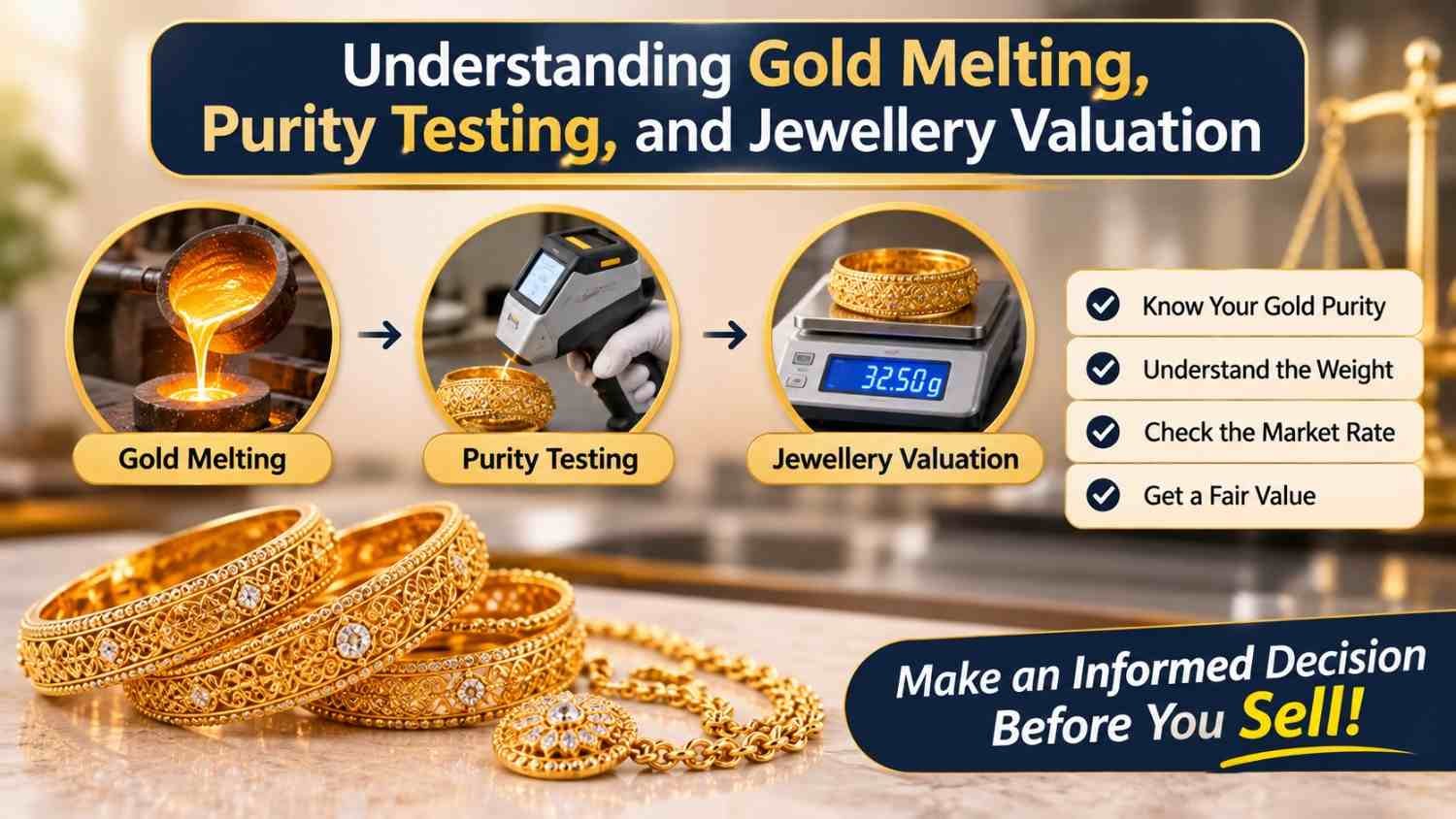
Understanding Gold Melting, Purity Testing, and Jewellery Valuation
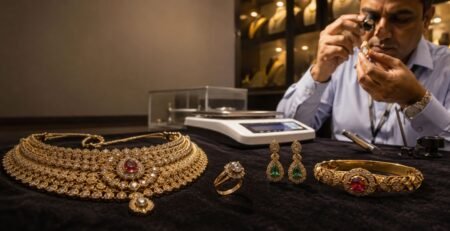
Gold jewellery is more than just an accessory; it is also a valuable asset that can provide financial benefits when you decide to sell it. However, before selling old gold ornaments, it is important to understand how gold melting, purity testing and jewellery valuation work. These processes help determine the actual gold content and estimated value of your jewellery.
Many people own old, damaged or outdated gold jewellery but are unsure how its selling price is calculated. Understanding the evaluation process can help you make informed decisions and avoid confusion during a transaction. Sona Chandi Buyers believes that customers should have a clear understanding of gold assessment before selling their valuable items.
What Is Gold Purity Testing and Why Is It Important?
Gold purity testing is the process of identifying the actual gold content present in a jewellery item. Pure gold is generally measured in 24 karats, while jewellery is commonly manufactured using different purity levels, such as 18K and 22K.
Since gold ornaments may contain other metals to improve strength and durability, their actual gold content can differ.
Here are some common gold purity levels:
- 24K Gold: Contains approximately 99.9% gold and is commonly used for coins and bars.
- 22K Gold: Contains approximately 91.6% gold and is widely used for traditional jewellery.
- 18K Gold: Contains 75% gold and is often used for diamond-studded and designer jewellery.
- 14K Gold: Contains approximately 58.5% gold and is used in certain jewellery designs.
Purity testing helps buyers understand how much actual gold is present in an ornament. Sona Chandi Buyers encourages customers to understand the purity assessment process before making a selling decision.
Different Methods Used for Gold Purity Testing
Professional gold evaluation may involve different testing techniques depending on the jewellery type and assessment requirements.
1. XRF Gold Testing
X-ray fluorescence (XRF) testing is a modern technique used to analyse the metal composition of gold jewellery. It helps identify the approximate percentage of gold and other metals without requiring the item to be melted.
Key advantages include:
- Non-destructive testing in normal use.
- Quick analysis of metal composition.
- Identification of different metals in an alloy.
- Useful for preliminary jewellery assessment.
2. Touchstone Testing
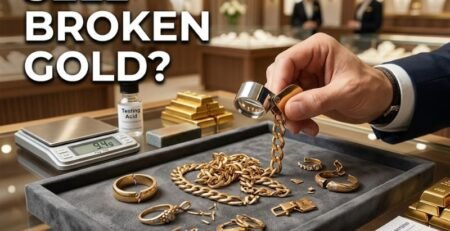
Touchstone testing is a traditional method in which a small sample of metal is rubbed against a testing stone. The resulting mark is compared with reference samples using an appropriate testing solution.
It can provide an indication of gold purity, although results depend on the testing technique and the skill of the evaluator.
3. Hallmark Verification
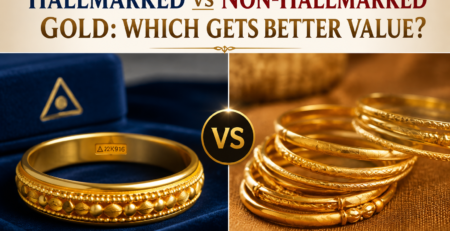
A hallmark is an official indication of the purity of precious metal jewellery. In India, BIS hallmarking helps consumers identify the declared purity of eligible gold jewellery.
However, hallmark verification and independent purity testing serve different purposes. A hallmark provides important purity information, while a buyer may still assess the jewellery during the selling process.
What Is Gold Melting and Why Is It Done?
Gold melting involves heating gold jewellery until it becomes liquid metal. It may be used in refining and recovery processes to separate gold from other materials and obtain a more consistent sample for further assessment.
Old jewellery often contains solder, alloys, stones and other materials. Melting and subsequent refining can help determine the recoverable gold content more accurately.
Some important reasons for gold melting include:
- Separating gold from certain non-gold components.
- Supporting the recovery of precious metal from old ornaments.
- Preparing metal for further purity analysis.
- Processing damaged or outdated jewellery.
- Assessing the composition of mixed gold articles.
It is important to understand that melting is not always necessary for an initial valuation. Non-destructive testing methods may be used first, depending on the item and the buyer’s assessment procedure.
How Is Old Gold Jewellery Valued?
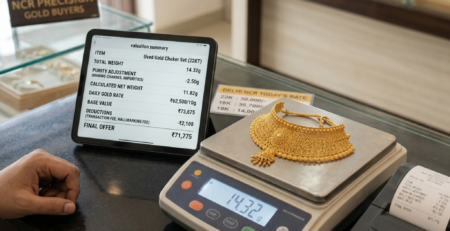
Gold jewellery valuation involves calculating the estimated worth of the recoverable gold content. The final offer is not necessarily based on the original purchase price because jewellery making charges, design costs and retail margins generally do not translate into resale value.
Several factors influence the valuation:
1. Gold Purity: Higher gold content generally increases the metal value of an ornament.
2. Net Gold Weight: The actual gold weight is important. Precious stones, beads and other non-gold components may need to be excluded.
3. Current Gold Market Rate: The prevailing gold rate on the transaction date plays an important role in determining the value.
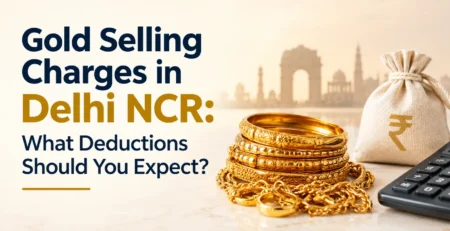
4. Applicable Deductions: Any refining, processing or other applicable deductions should be explained clearly.
5. Type of Jewellery: Coins, bars, chains, rings and other ornaments may require different evaluation procedures.
Understanding these factors helps customers compare offers and make more confident decisions.
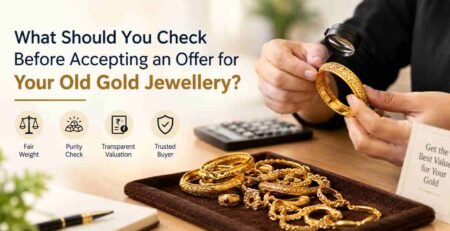
6 Things to Check Before Selling Your Old Gold Jewellery
Before visiting a gold buyer, keep these important points in mind:
- Check the hallmark or available purity information on your jewellery.
- Understand the current market gold rate.
- Ask how the jewellery will be weighed.
- Confirm whether stones and non-gold components will be excluded.
- Understand all applicable deductions before accepting an offer.
- Request a clear explanation of the valuation and payment process.
If you are searching for a reliable gold buyer in sector 31 gurgoan, comparing the evaluation process and transaction transparency can help you make a better choice.
Gold, Silver and Diamond Valuation: Understanding the Difference
Gold, silver and diamonds are valuable materials, but they require different evaluation methods.
- Gold: Its value is primarily influenced by purity, net weight and the prevailing market rate.
- Silver: Its valuation depends on purity, weight and the current silver market price.
- Diamonds: Their value is influenced by factors such as cut, colour, clarity, carat weight, certification and market demand.
For customers looking to sell precious metals, choosing an experienced Silver buyer in Gurugram can help them understand the assessment of old silver articles. Similarly, people interested in selling pre-owned diamond jewellery can explore the services of a second hand diamonds buyer in Dwarka.
Why Choose Sona Chandi Buyers for Jewellery Valuation?
Understanding the evaluation process is essential when selling precious metals and jewellery. Customers should always look for a buyer who communicates clearly about testing methods, weighing procedures, valuation factors and applicable deductions.
Sona Chandi Buyers aims to make the jewellery-selling process more convenient by helping customers understand the important aspects of precious metal valuation.
Whether you have old gold chains, broken ornaments, rings, coins or other gold articles, getting them properly evaluated can help you understand their potential selling value.
The company focuses on important aspects such as transparent communication, purity assessment, accurate weighing and a clear explanation of the transaction process.
Conclusion
Gold melting, purity testing and jewellery valuation are important stages in understanding the actual worth of old gold ornaments. While purity testing identifies the gold content, melting and refining may help recover and assess precious metals when required. The final valuation depends on purity, net weight, current market rates and applicable deductions.
Before selling your jewellery, understand the assessment process and compare the offers carefully. Sona Chandi Buyers encourages customers to make informed decisions by understanding the value of their precious metals and choosing a transparent jewellery-buying process.