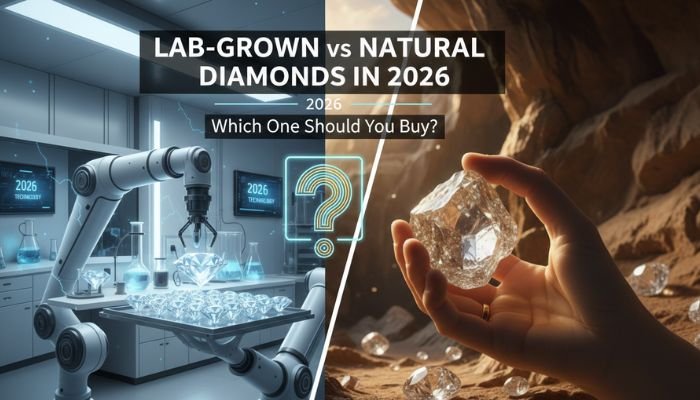
Lab-Grown vs Natural Diamonds in 2026: Which One Should You Buy?
One of the largest choices that jewel consumers make in 2026 is whether to buy a diamond that is grown in a laboratory or a natural diamond. The diamond industry has changed significantly with an increase in prices, environmental consciousness, and the high rate of technological changes.
Large corporations such as De Beers have ventured into lab-grown manufacturing, and most major online retailers now offer natural and lab-created diamonds side by side. This has simplified the process of comparing options more than ever before, but it has also made the decision more complex — especially for a diamond buyer in Gurgaon trying to balance budget, sustainability, and long-term value.
In this SEO guide, we are going to deconstruct lab-grown and natural diamonds, such as cost, quality, sustainability, resale price, and which one is the best option for you in 2026.
What Is a Natural Diamond?
A natural diamond is formed in the depths of the earth within 1 to 3 billion years at a very high level of heat and pressure. The earth is mined to acquire these diamonds, which are then cut, polished and fitted into engagement rings, wedding bands, as well as fine jewellery.
Natural Diamond Certification and the 4Cs
Natural diamonds are graded based on the internationally recognised 4Cs:
- Cut
- Color
- Clarity
- Carat Weight
Most reputable stones are certified by organizations like the Gemological Institute of America (GIA), ensuring quality and authenticity.
Why Buyers Choose Natural Diamonds
- Geological rarity
- Traditional symbolism of eternal love
- Strong luxury perception
- Better long-term resale potential
For many buyers, the fact that a diamond is billions of years old adds emotional and symbolic value.
What Is a Lab-Grown Diamond?
A synthetic diamond (also known as a lab-grown diamond or man-made diamond) is a product made in a regulated laboratory setting through some high-tech methods that mimic the process of natural diamond growth.
Two primary production methods are used:
- High Pressure High Temperature (HPHT)
- Chemical Vapour Deposition (CVD)
Are Lab-Grown Diamonds Real?
Yes. Lab-grown diamonds are 100% real diamonds.
They have:
- The same chemical structure
- The same brilliance and fire
- The same hardness (10 on the Mohs scale)
- The same durability as natural diamonds
Even professional jewelers need specialized equipment to distinguish between the two.
Lab-Grown vs Natural Diamonds: Price Comparison in 2026
Price is one of the most important factors when choosing a diamond.
In 2026:
- Lab-grown diamonds cost 40%–70% less than natural diamonds of similar quality.
- A 1-carat natural diamond may cost $4,000–$6,000.
- A similar lab-grown diamond may cost $1,500–$2,500.
Why Are Lab-Grown Diamonds Cheaper?
- No mining costs
- Faster production
- Increased global supply
- Advancing technology
If you want a bigger diamond for your budget, lab-grown is often the better value option.
Sustainability and Ethical Considerations
Natural Diamonds and Mining Impact
Diamond mining has the ability to interfere with ecology and works intensive energy. The issue of conflict diamonds received global coverage with the release of Blood Diamond.
The modern day sourcing policies and international laws have enhanced transparency in the natural diamond business. Nevertheless, mining does not have no environmental impact.
Lab-Grown Diamonds and Environmental Impact
Lab produced diamonds do not necessitate mining activities thus minimizing the disturbance of land. They also need power, and the carbon footprint is based on the use of renewable or fossil fuel energy.
Overall, lab-grown diamonds are regarded as more environmentally friendly, in particular, when they are manufactured with clean energy.
Resale Value and Investment Potential
When you are looking at long-term value, the natural diamonds tend to retain their resale value.
Natural diamonds of high values are still sold by such luxury auction houses as Sotheby, which contributes to their collectible value.
Diamonds grown in the laboratory, though, are usually less likely to resell since they can be produced in greater quantities. With the advancement of technology, prices can be even lower.
One more point to note: Both natural and lab diamonds are not to be perceived as some financial venture and should not be considered that way in the short term. They are majorly luxurious buying.
Appearance and Durability: Is There a Visible Difference?
To the naked eye, there is no visible difference between lab-grown and natural diamonds.
Both:
- Rank 10 on the Mohs hardness scale
- Offer identical sparkle and brilliance
- Are suitable for everyday wear
- Can last a lifetime
In terms of beauty and strength, they perform equally well.
Pros and Cons of Natural Diamonds
Advantages
- Rare and traditional
- Stronger resale market perception
- Long-standing prestige
Disadvantages
- Higher price
- Environmental impact from mining
- Smaller size within limited budgets
Pros and Cons of Lab-Grown Diamonds
Advantages
- More affordable
- Ethical and sustainable appeal
- Larger stone for the same price
Disadvantages
- Lower resale value
- Prices continue to decline
- Less rarity and exclusivity
Which Diamond Should You Buy in 2026?
Your choice depends on your priorities.
Choose Lab-Grown Diamonds If:
- You want maximum size and quality within your budget
- Sustainability is important to you
- You prefer modern innovation
Choose Natural Diamonds If:
- Tradition and rarity matter to you
- You value long-term prestige
- Emotional symbolism of geological age is important
Final Thoughts: Lab-Grown vs Natural Diamonds in 2026
The argument over whether lab, grown or natural diamonds are real is basically over now in fact, these are both real diamonds that share the same physical characteristics.
By 2026, lab, created diamonds lead in price and ethics, whereas natural diamonds hold on to tradition, scarcity, and lasting repute.
At the end of the day, the right diamond is the one that reflects your value system, financial capacity, and personal narrative.
Choosing lab, grown or natural, either way, your diamond will sparkle no less and it is that sparkle which is the real point.