Understanding 925 Silver vs Pure Silver for Better Selling in Dwarka
If you are planning to sell silver today, one confusion almost everyone faces is simple but important: 925 Silver vs Pure Silver. The difference sounds small, but when you walk into a market or visit a silver buyer in Dwarka, it can directly affect how your silver gets evaluated and priced.
Many people also get surprised when they learn that their pure-looking jewellery is actually not pure silver at all. Don’t worry, you are not alone, silver has been confusing people for centuries, and honestly, it still does a decent job at it.
In this guide, we’ll break down everything in a clear, practical way so you understand what you actually own and how it impacts selling. Trusted buyers like Sona Chandi Buyers often explain these differences daily to sellers who come in with similar doubts.
What is 925 Silver? (Sterling Silver Explained)
925 silver is also known as sterling silver. It contains 92.5% pure silver and 7.5% other metals, usually copper. This mix is intentional, not a flaw.
Pure silver is too soft for daily use. Imagine wearing a ring made of pure silver and accidentally bending it while opening a soda can that’s exactly why alloying exists.
The hallmark 925 silver meaning is simple:
It confirms the silver meets the standard silver composition and grading system used globally.
In India, the Hallmark 925 certification system (regulated by BIS standards) ensures that buyers and sellers can trust the purity level without guesswork.
So when you see 925 stamped on jewellery, it basically means: Strong enough for daily use, but still mostly silver.
What is Pure Silver (999 Silver)?
Pure silver is also called 999 silver or fine silver. It contains 99.9% silver content, making it the highest purity form available.
Under the silver purity levels 925 vs 999 system, 999 silver sits at the top.
But here’s the catch: pure silver is extremely soft. It bends, scratches, and loses shape easily. That’s why jewellers rarely use it for everyday jewellery. You’ll mostly see it in:
- Investment coins
- Bars
- Collectible items
So yes, it’s pure, but not always practical. Think of it like wearing silk shoes for trekking, beautiful, but not exactly smart.
925 Silver vs Pure Silver: Key Differences
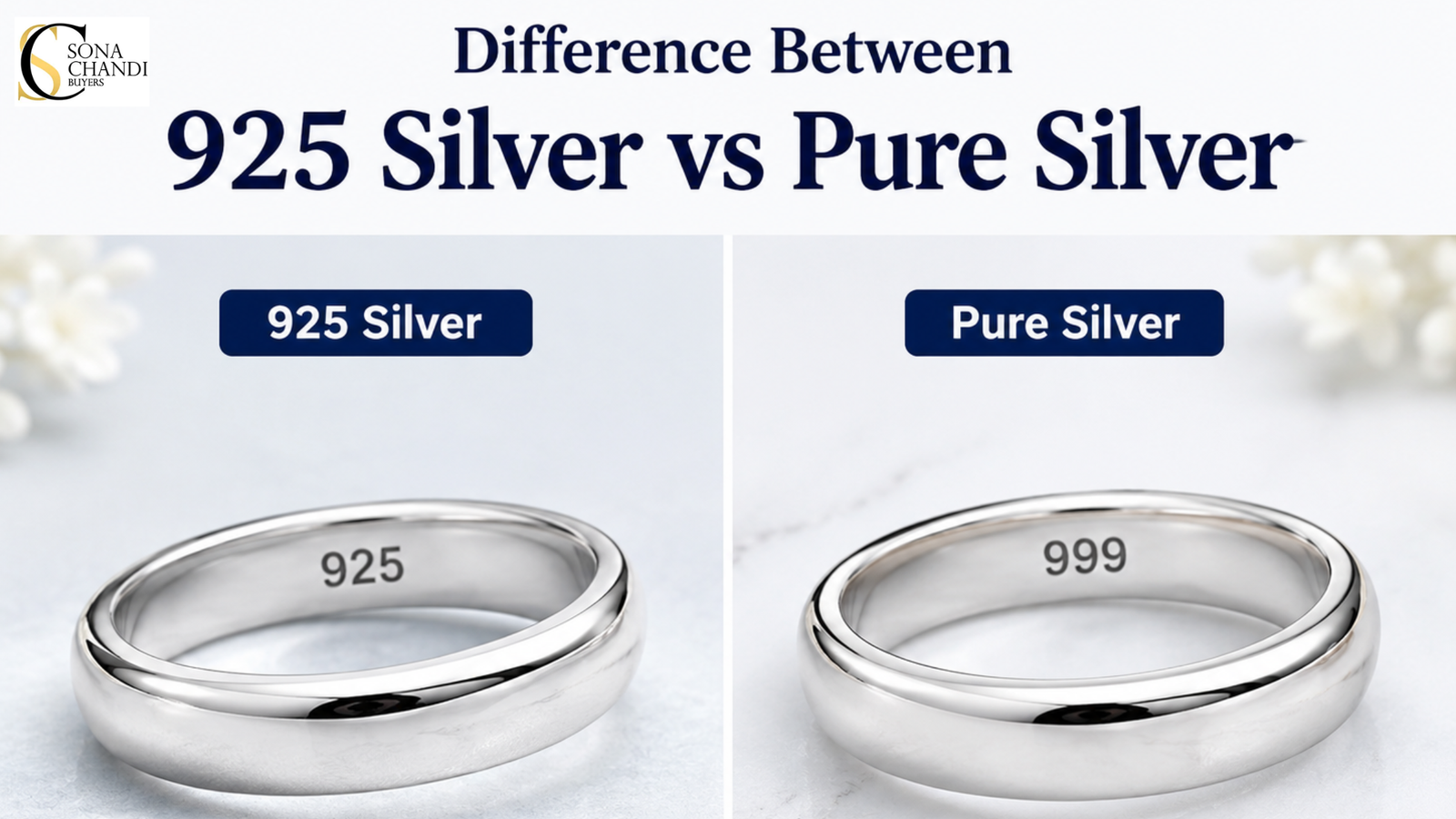
Now let’s clear the confusion with a simple breakdown of Differences between 925 Silver vs Pure Silver.
1. Composition
- 925 Silver: 92.5% silver + 7.5% alloy metals
- Pure Silver: 99.9% silver
2. Strength
- 925 Silver: Strong and durable
- Pure Silver: Very soft and bendable
3. Usage
- 925 Silver: Jewellery, rings, chains, ornaments
- Pure Silver: Coins, bars, investment pieces
4. Price Impact
- Pure silver usually has higher intrinsic value per gram
- But jewellery value depends on making charges and resale conditions
5. Durability
- 925 wins easily in daily wear situations
- Pure silver wins in purity but loses in practicality
This is where people often search for sterling silver vs pure silver difference, because the gap isn’t just chemical, it affects real-world usage and resale value.
A trusted silver buyer like Sona Chandi Buyers evaluates both types differently, depending on purity confirmation and market rate.
How to Identify 925 Silver vs Pure Silver
Understanding how to identify 925 silver vs pure silver is important before selling.
Here are the most reliable methods:
1. Hallmark Check
Look for stamps:
- 925 = sterling silver
- 999 = pure silver
This comes under the official Hallmark 925 certification system.
2. BIS Hallmark Verification
In India, the Bureau of Indian Standards (BIS) ensures authenticity for hallmarked items. Genuine jewellery often carries BIS symbols.
3. Magnet Test (Basic Check)
Silver is not magnetic. If it strongly sticks to a magnet, it is likely not pure silver. However, this is not a final test.
4. Weight & Appearance
- Pure silver feels slightly heavier
- 925 silver is more durable in design and polish
5. Professional Testing
Reliable buyers like Sona Chandi Buyers use proper purity testing machines instead of guesswork, ensuring transparent evaluation.
Which Silver is Better for Selling in Dwarka?
If your goal is selling, the answer depends on purity, condition, and market rate—not just emotional value.
A common question people ask a silver buyer is whether 925 silver or pure silver gives better resale value.
Here’s the reality:
- Pure silver has higher metal value
- 925 silver may include making charges deduction during resale
- Final pricing depends on weight and purity confirmation
This is why sellers prefer trusted platforms like Sona Chandi Buyers, where evaluation is transparent and based on actual silver content, not confusion or guesswork.
When you visit a silver buyer, always ask for:
- Purity testing method
- Live silver rate reference
- Clear breakdown of deductions
Also Read This Blog: Unlocking Value: The Importance of Trusted Silver Buyers
Common Mistakes People Make While Selling Silver
Let’s be honest most losses happen not because of silver, but because of lack of awareness.
Here are common mistakes:
1. Assuming all shiny silver is pure
Shiny doesn’t always mean valuable.
2. Ignoring hallmark stamps
A small 925 or 999 mark can completely change valuation.
3. Not checking current silver rate
Silver prices change regularly, so outdated expectations cause disappointment.
4. Selling without verification
Many people skip proper testing and rely on verbal claims.
A professional silver buyer like Sona Chandi Buyers usually avoids these issues by following structured testing and transparent pricing methods.
Final Verdict: Which One Should You Choose?
If your focus is jewellery and daily use, 925 silver wins clearly because of its strength and durability.
If your focus is investment or purity value, 999 pure silver is the highest standard.
But here’s the practical truth: Most people don’t buy silver for theory, they buy it for use or resale.
So when you step into a market or visit our store, what matters most is not just purity, but transparency in evaluation.
Conclusion: Your Final Guide to 925 Silver vs Pure Silver
Understanding 925 Silver vs Pure Silver helps you make smarter decisions, especially when selling jewellery or investment items. Whether you choose 925 for durability or 999 for purity, the key is knowing what you own.
For anyone planning to sell silver safely and transparently, trusted names like Sona Chandi Buyers and a reliable silver buyer can help ensure you get fair value based on actual purity, not assumptions.
If you are looking for a quick, transparent, and professional silver evaluation, you can visit Sona Chandi Buyers’ nearest branch in Dwarka or contact our team directly for real-time assistance and fair pricing based on live market rates.
We make the process simple, clear, and trustworthy so you always know exactly what your silver is worth before you sell.
FAQs
Yes. It contains 92.5% silver and is officially recognized as sterling silver.
Because it is too soft and loses shape easily.
Yes, but value depends on weight, purity, and current silver rates.
You can look for hallmarks like 925 or 999, but professional testing is more reliable.